
enjalot's foreseeable future
some data vis tooling news

Next week I embark on a new adventure, joining Observable as a data visualization developer! I have a ton of ideas, both for how I hope to use Observable as well as contribute to it. I will be sharing those soon, for now I’m making a promise to work much more in the open, sharing my process via notebooks, live streams and videos.
Blockbuilder
This week I want to focus on a story that is coming to a close: Blockbuilder.
Almost 5 years after the Blockbuilder's successful Kickstarter, I’ve made the hard choice to acknowledge that it is time to sunset Blockbuilder so I can focus on other things.
By the end of the year Blockbuilder will become a searchable archive of blocks. I’ve written up a detailed sunsetting plan with context and next steps, so in this post I will be focused more on my personal perspective and how I worked on it.
Blockbuilder was built on the concept of using GitHub gists as the database for d3.js example established by Mike Bostock’s bl.ocks.org. I saw so many awesome d3 examples as blocks, and got a lot of help from the community by making my own. It became clear that it needed to be easier to make them.
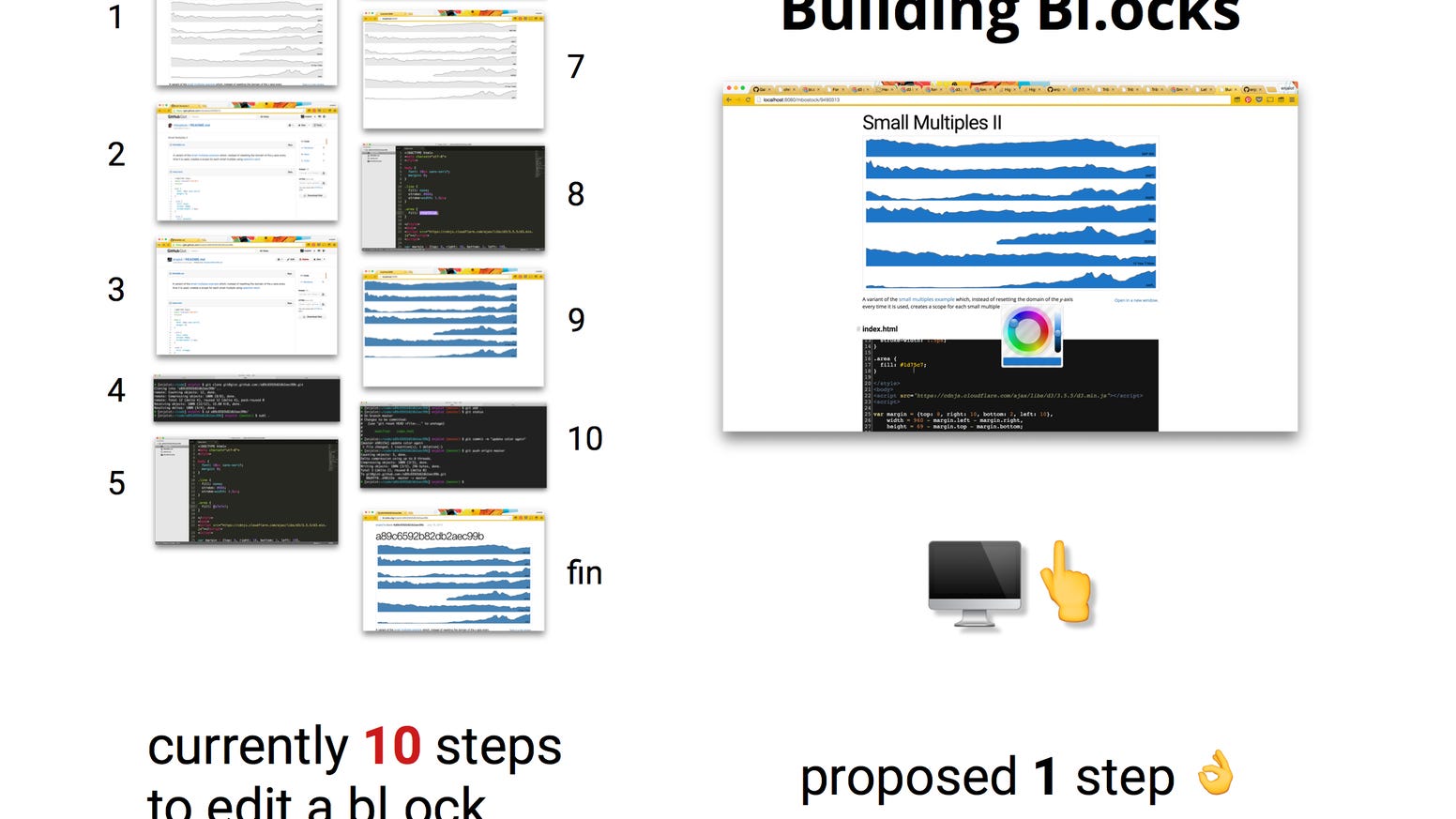
The pitch was a simple in-browser editor that handled editing, saving and forking the gists for you. I mocked up a prototype and setup a kickstarter, and the response was exhilarating.
The funding goal was blown past and almost two hundred people backed the project. I felt a lot of pride and a lot of responsibility.
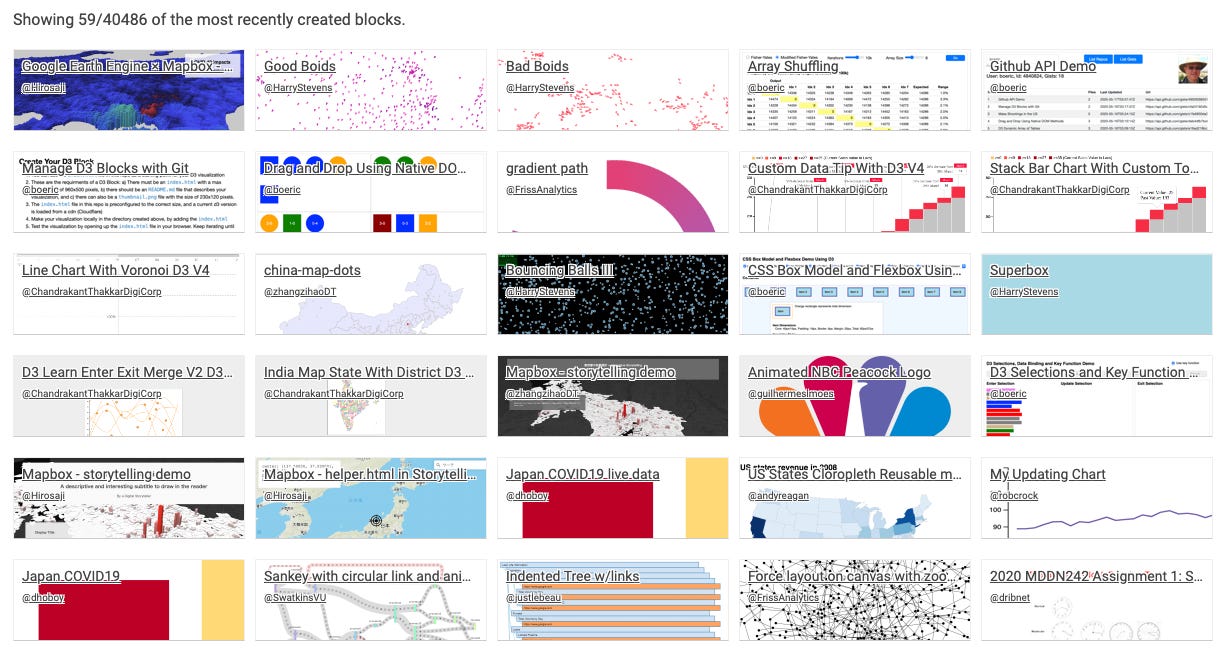
Since 2015 thousands of people have made tens of thousands of blocks. The community quickly recognized that with all of these new blocks popping up, it would be great if they could be searched. But since there was no central database of blocks I set out to put one together.
Inspired by block explorer by Irene Ros I collected public blocks everywhere I could find them and pulled out all of the usernames. Using the GitHub API I was able to download and process all of the public gists of those users (code repo). This allowed us to index those blocks and make them searchable.
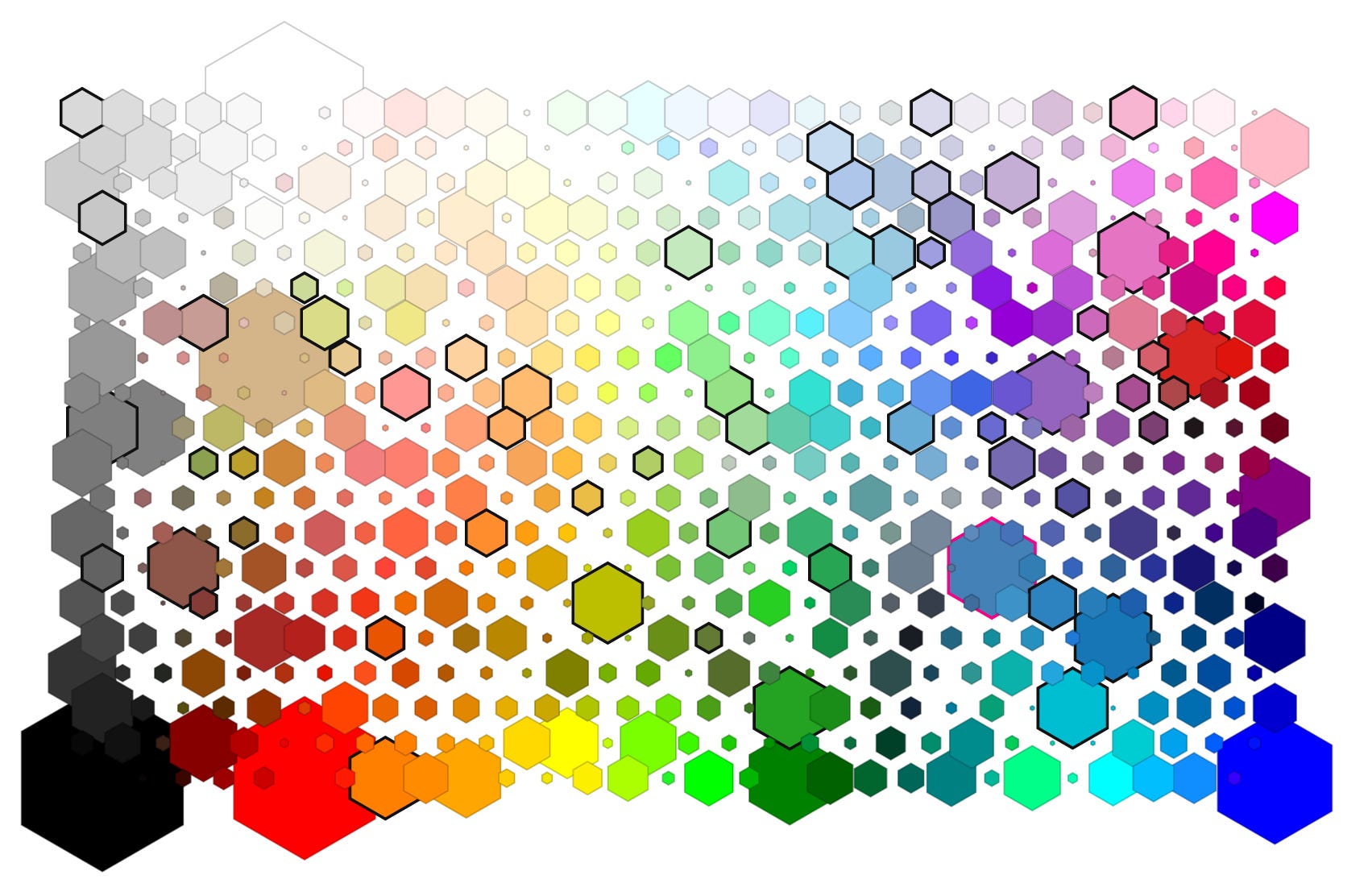
image credit: Nadieh Bremer
The project is open source and I can’t thank the contributors enough, with special thanks to Erik Hazzard for setting up the initial React app and Micah Stubbs for numerous improvements to the UI and search functionality.
Between work and life I haven’t been able to devote the attention and leadership I would have liked to give the project recently.
It became more apparent that for Blockbuilder to continue to add value as an in-browser code editor it would take a team effort to build out. Meanwhile Observable has introduced a paradigm shift for in-browser coding with a jaw-dropping team behind it. A team I’m incredibly excited to join!
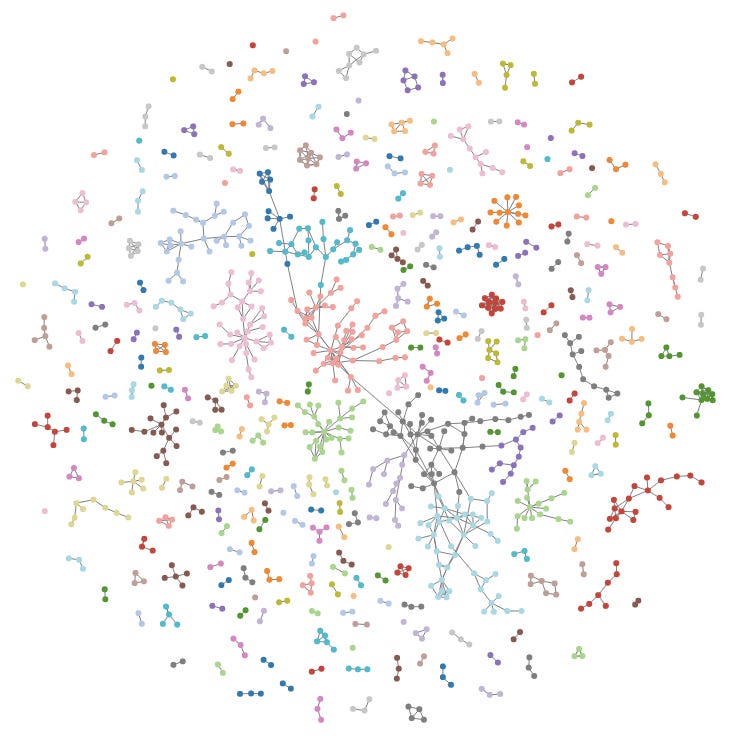
image credit: Micah Stubbs
Blockbuilder still offers something pretty unique, the searchable index of 40 thousand blocks. I plan to keep the search alive indefinitely as well as make it easier to work with the underlying data. I’ve made an observable notebook that can be used as a starting point for programmatically working with the data. I’m planning to upload a few different flat-file views of the complete database to make it easier to visualize the entire collection in various ways. I’m sure there are very interesting things we could learn from visualizing such a large amount of work done by the community!

My main regret is that I didn’t have enough conversations with the large number of folks who have used Blockbuilder in their work, teaching and learning. I’d love to hear if you used Blockbuilder in your own journey. If it’s still an essential tool for you I want to talk about the best options for your workflow.
You can reply to this email or join us in the #blockbuilder channel on the d3.js slack (which also has an #observable channel).
Either way, I always like hearing about what you’re excited about in data visualization, so reach out!